
Pourquoi se rendre au Mont Kilimandjaro ?
SAFARI
Near Kilimanjaro, you can go on safari in Arusha National Park or in Amboseli in Kenya to see lions, giraffes, elephants, wildebeest and many other iconic East African animals.
Also take advantage of being in northern Tanzania to discover the spectacular landscapes offered by Lake Natron and its thousands of pink flamingos.
If you wish to relax after your excursion, you also have the option of unwinding on the splendid beaches of the Zanzibar archipelago with its turquoise blue water.
ANIMALS PRESENT
During your expedition you will have the opportunity to spot various types of animals:
- The crowned monkey
- The Angola colobus and the Kilimanjaro colobus
- The olive baboon
- The leopard
- The banded mongoose
- The serval
- The bushpig
- The honey badger
- The porcupine
THE FLORA OF KILIMANJARO
Plains
The Kilimanjaro plains are located between 600 and 800 metres. The warm, dry climate also favours vegetation dominated by savannah with many grass species.
Tropical forest
Between 1,600 and 2,700 metres above sea level lies the tropical forest. This zone is weakened by human activity (deforestation, fire).
The mist forest
This forest covers the southern slope of the mountain, between 2,300 and 2,500 metres above sea level. It is dominated by the presence of the podocarpus tree, as well as several species of mosses and ferns that cover around 80% of the trees.
The cloud forest
This fascinating forest will surprise you with its spectacular character. It is found on the escarpments to the west, north and north-east. It is generally located between 2,500 and 2,700 metres above sea level and features many fascinating examples of tree heather, juniper and Afrocarpus gracilior.
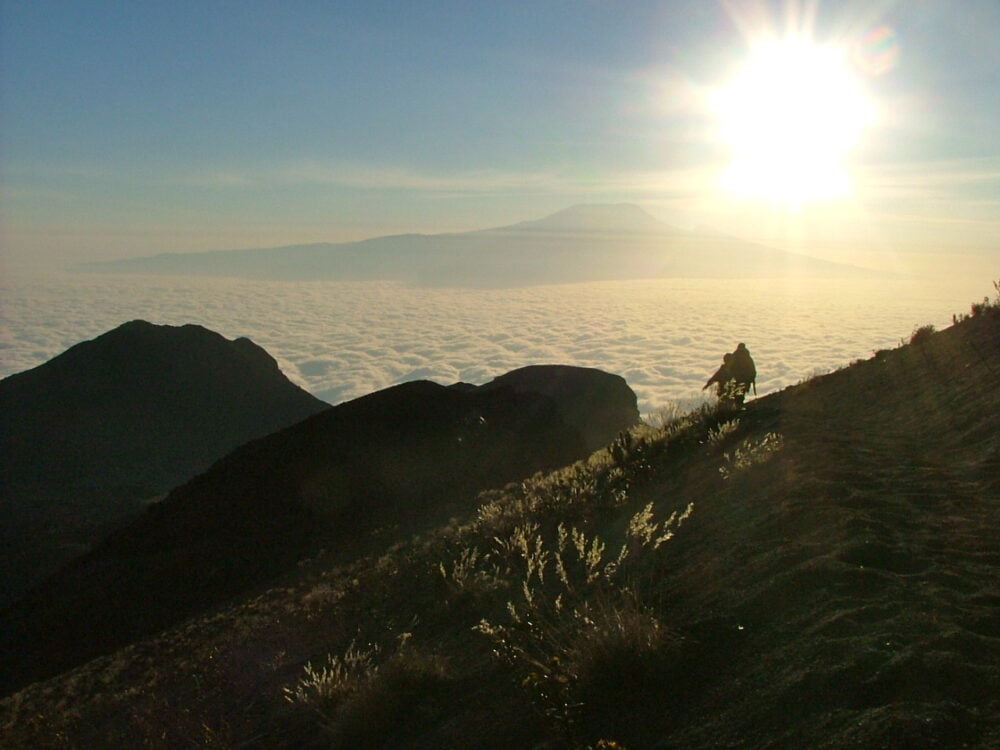
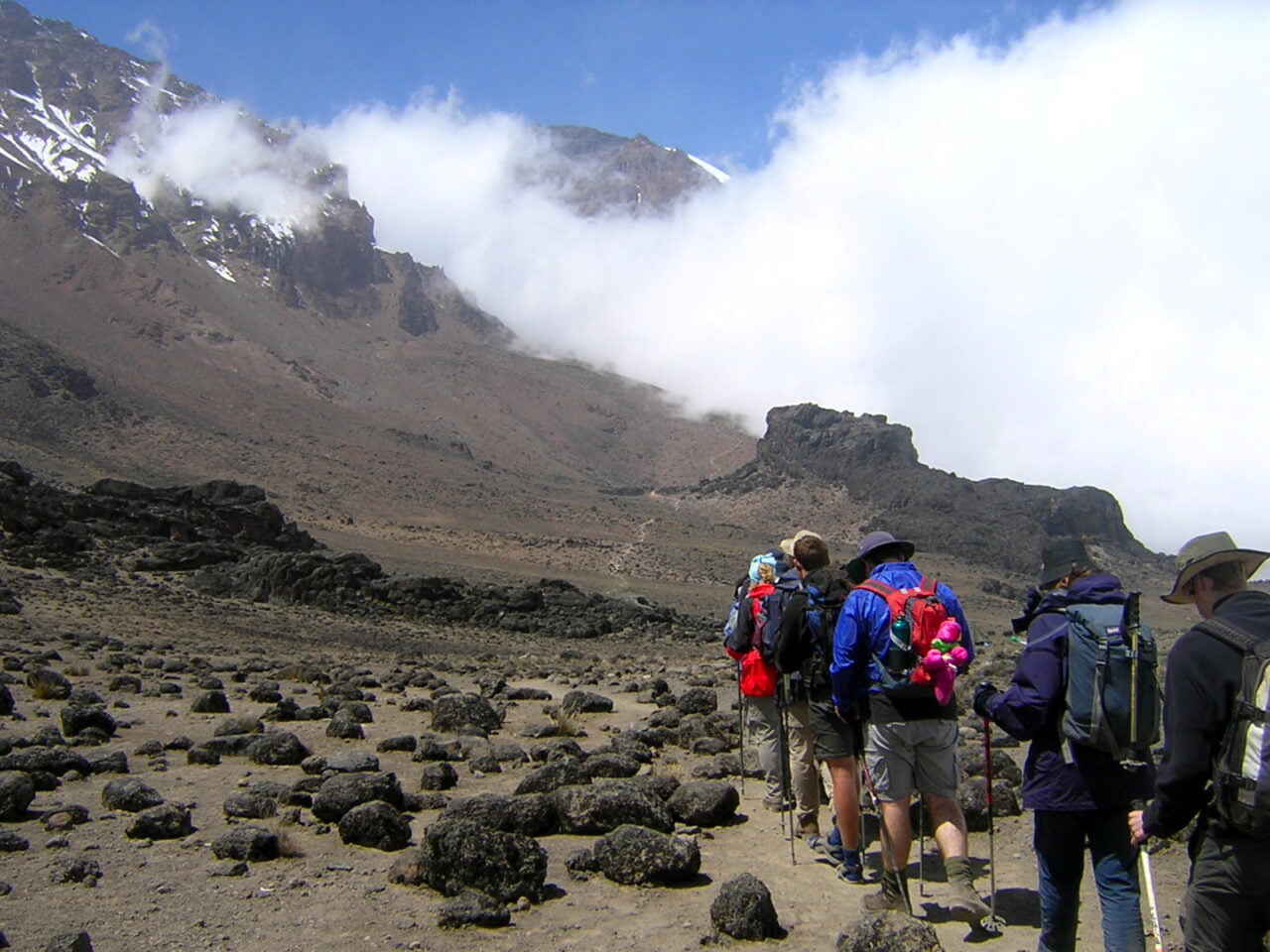
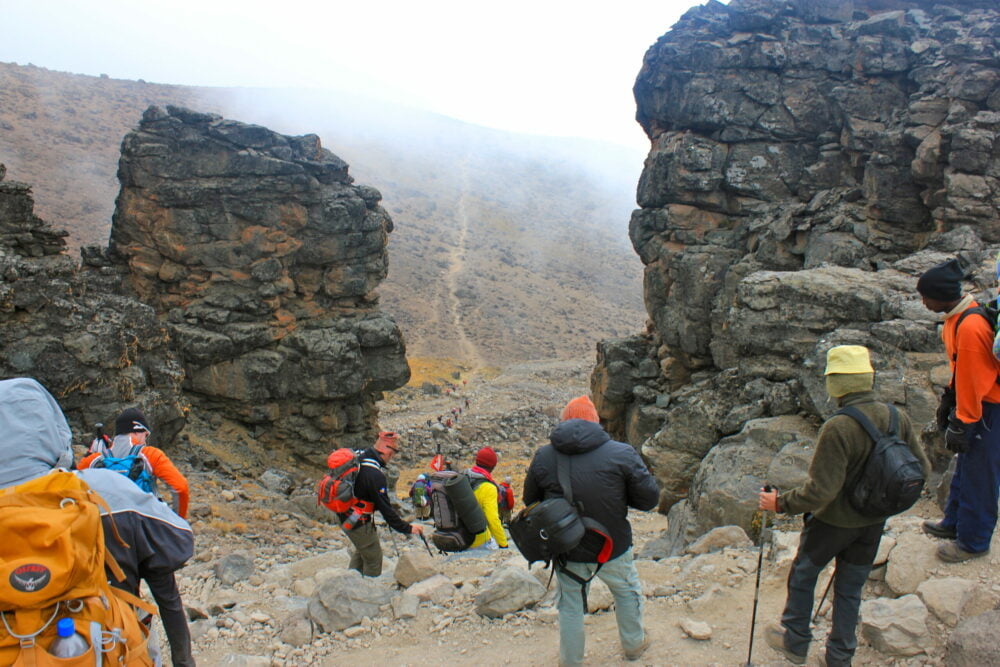
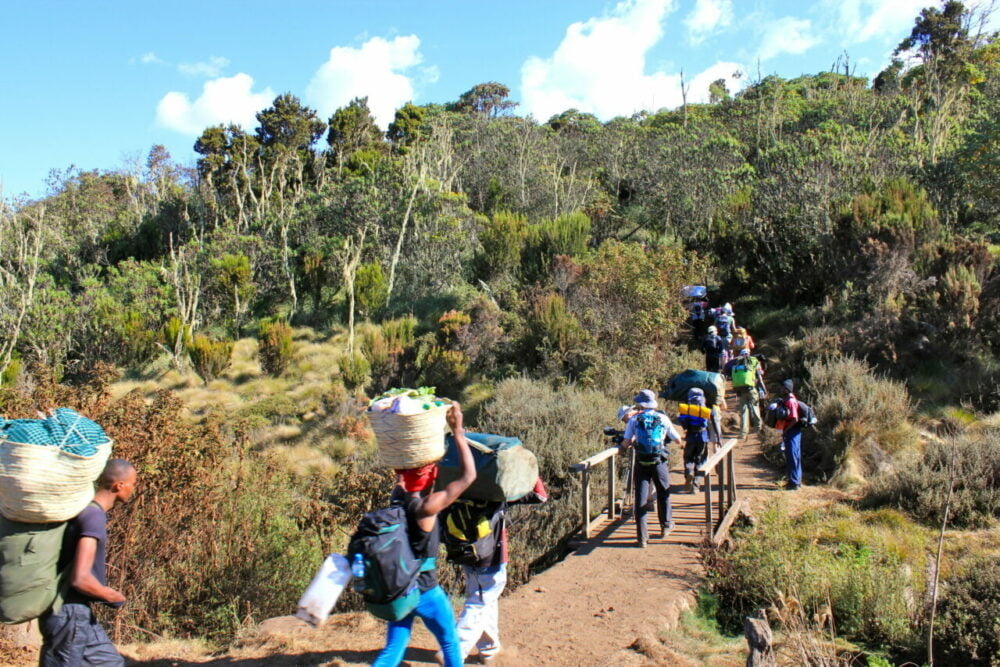
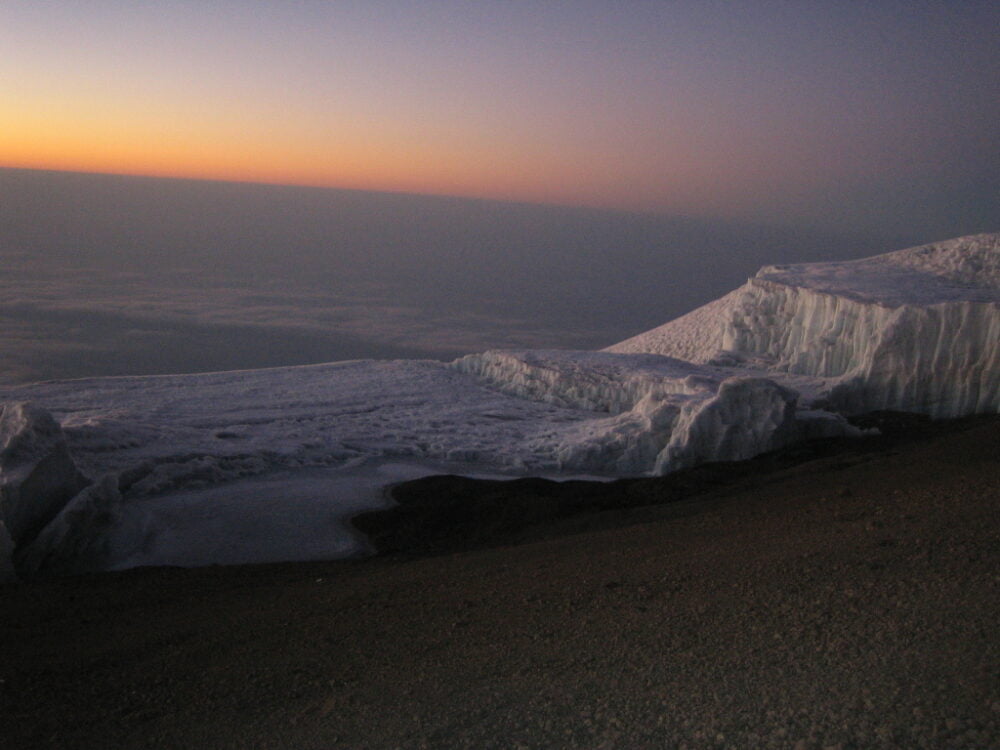
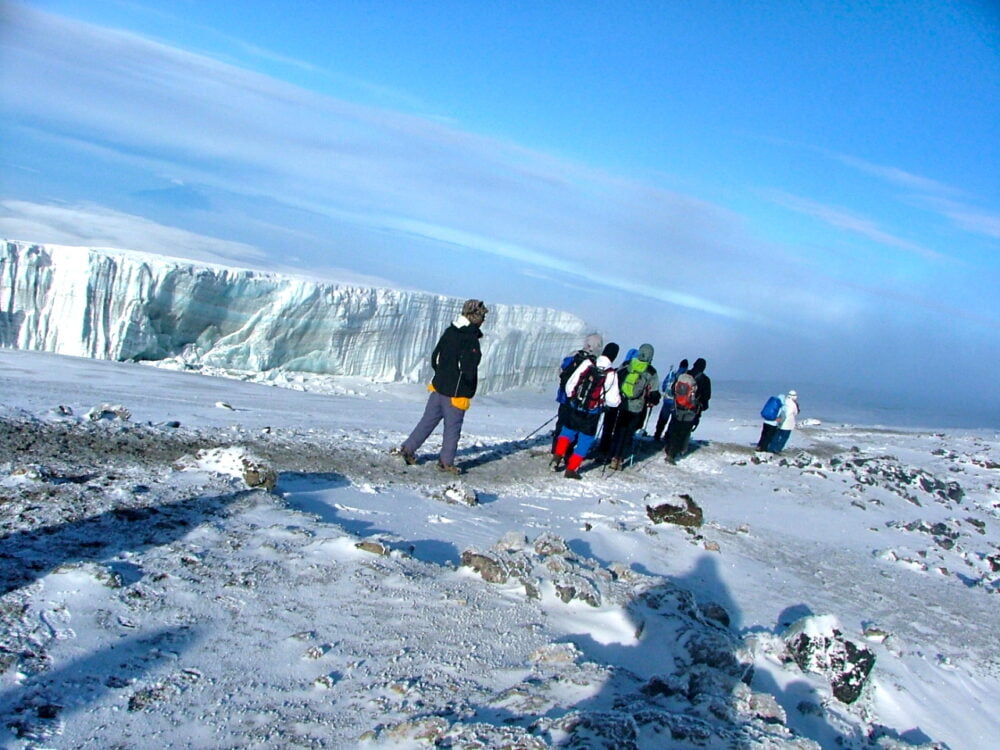
TANZANIA TOUR: ASCENT OF KILIMANJARO
Climbing Kilimanjaro is no small feat. But with the help of a local guide, you can reach the summit. There are different routes to the top of the mountain, short and long, difficult and easier. Let us help you reach the summit.
- Machame route
- Rongai route
- Marangu route
- Lemosho route
Machame route
Often considered the best for acclimatisation. Indeed, it is the most popular choice for hikers attempting to reach the summit of Mount Kilimanjaro for the first time. The route is long and varied, exposing climbers to a range of landscapes and experiences throughout the trek. From the rainforest at Machame Gate, through the rocky plateaux, to the glacial peaks of the final ascent.
Marangu route
The Marangu route is the shortest and therefore quickest trekking route (just 20 km).
You will pass through a richly wooded area full of fruit trees, butterflies and ferns, as well as waterfalls.
Be prepared to walk 5 to 6 hours a day, except on the final day when you will need to draw on your reserves for a 10-hour hike.
Rongai route
This is the only route from the north, leading from the summit of the mountain.
It will be a 6-day journey, with much of the terrain off the beaten track and wild. You will begin your route along the Kenyan border, and finish along a wooded path in Tanzania.
Lemosho route
The Lemosho route is breathtakingly beautiful, with a high success rate and a tranquillity rarely found in the heart of Africa.
Please note that the price of the Lemosho route is slightly higher than the other routes for transport reasons.
Tips for the ascent?
Our guides are professionals trained to accompany you and help you reach the summit in the best possible conditions. Put your trust in them and listen to their expert advice.
We advise you to drink at least 2.5 litres a day, to protect yourself effectively from the sun and, above all, to take your time. The energy saved during the first days of walking will be essential for reaching the summit.
If in doubt or if you have a problem, do not hesitate to ask your guide for advice.
Warning: you are only allowed one 12 kg bag for the climb, and the bags are weighed by the rangers at the park entrance!
- 1 rucksack (60 litre size) containing all your belongings, waterproofed in plastic bags
- 1 rucksack (25-30 litre size) for your day items
- 1 quality sleeping bag – comfort to –15°C, sarcophagus style
- 1 sleeping bag liner is strongly recommended
- 1 self-inflating sleeping mat for extra comfort (we provide a 5 cm foam mattress except for the Marangu route, where you sleep in a hut)
- 1 pair of mountain boots that support the ankles well for walking
- 1 pair of trainers for the evening, 1 pair of warm woollen socks
- 2 warm underlayers (leggings, thermal top… it can get very cold – avoid cotton)
- 1 fleece or warm woollen jacket
- 1 waterproof Gore-Tex or microporous shell jacket
- 1 rain cape
- 1 warm hat
- and 1 good pair of gloves (for the last few days)
- 1 cap or equivalent to protect you from the sun
- 1 very good pair of sunglasses (don’t forget you are at altitude under the equator!)
- 1 water bottle
- 1 LED headtorch (with spare battery)
- Telescopic trekking poles (also advisable)
- Enough T-shirts for the duration of the trek (synthetic or wool)
- 1 trekking trousers
- 1 warm waterproof trousers for the final ascent 1 survival blanket
How do you get to Kilimanjaro?
DRIVE TIMES TO KILIMANJARO
- The journey from Arusha to the foot of Kilimanjaro takes two and a half hours.
- From Tarangire National Park / Manyara Lake to Kilimanjaro it takes 4 hours by road.
- Ngorongoro – Kilimanjaro approximately 4.5 hours by road
- From Serengeti National Park to the Serengeti approximately 6.5 hours by road
Travelling by car between the different parks allows you to enjoy the landscapes and African wildlife that Tanzania has to offer.
Where to stay?
Before your climb of Kilimanjaro, we recommend staying at the Moyoni Airport Lodge located near Kilimanjaro Airport. This charming lodge, with 12 rooms overlooking Kilimanjaro or Mount Meru, is the ideal place to begin a journey in northern Tanzania. It is also the perfect starting point to rest before a Kilimanjaro trek. Enjoy its swimming pool and green spaces and contemplate your goal: the summit of Africa’s highest mountain…