Giraffes, those impressive long-necked mammals emblematic of the African savannah, fascinate with their appearance and unique behaviour. Find out everything there is to know about this majestic animal: its exceptional height, surprising speed, distinctive diet, the differences between males and females, and other captivating facts. Throughout the article, immerse yourself in the world of giraffes and let yourself be transported to the heart of their natural habitat, where every aspect of their life is a discovery in itself.
A giant of the savannah: Discover the giraffe’s impressive size
Exceptional proportions that defy nature
The giraffe, with its iconic silhouette, is without doubt one of the most intriguing animals of the African savannah. Reaching up to 5.5 metres in height, it is the tallest land mammal. This extraordinary height, due largely to its disproportionately long neck, enables it to scan the horizon and feed where few other animals can reach. Males often have the edge over females by a few centimetres, and sometimes achieve impressive records.
But this remarkable height does not slow the giraffe down. Despite its long, slender legs, it is surprisingly fast. Capable of running at speeds of up to 60 km/h over short distances, it can move away quickly when faced with a predator. This unique blend of size, agility and speed makes it a masterpiece of natural adaptation in the savannah.
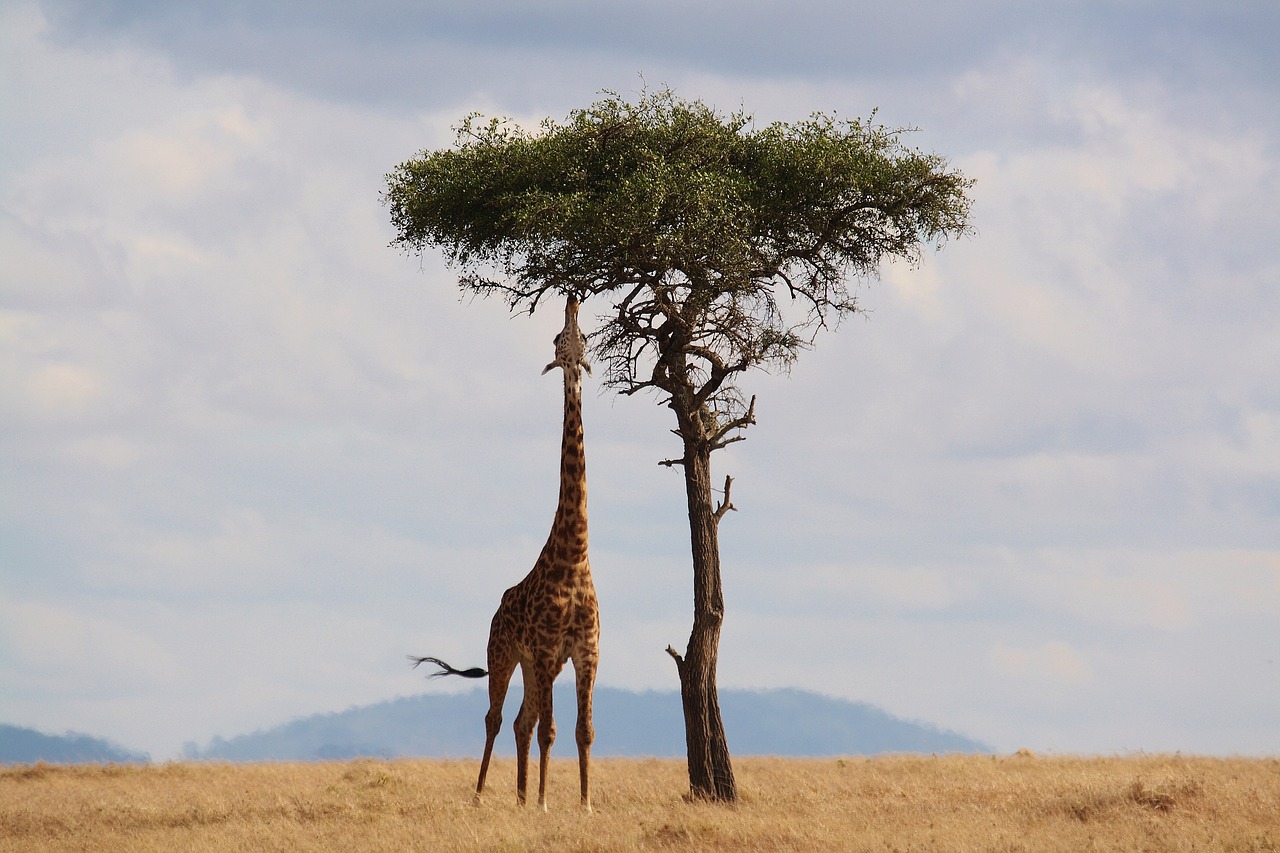
When it comes to feeding, the giraffe is a true expert at browsing. Equipped with an impressive, prehensile tongue nearly 50 cm long, it can reach the highest leaves of acacias, its favourite food. These often thorny leaves pose no problem thanks to its sturdy lips and adapted palate. The giraffe thus consumes up to 30 kg of vegetation a day to meet its energy needs.
Males, in particular, stand out not only for their size but also for their territorial behaviour and their “neck fights”. These spectacular clashes, known as “necking”, involve striking their opponent with their powerful neck to establish dominance or attract a female. These are fascinating scenes that our visitors can sometimes observe on our safaris.
As for their weight, these giants of the savannah certainly make their presence felt: an adult giraffe weighs between 800 and 1,200 kg, with males generally heavier than females. This imposing build is carried with astonishing grace, adding to their majestic aura. These unrivalled characteristics make every encounter with a giraffe utterly unforgettable, a moment of pure admiration for this creature that seems to defy the laws of nature.
How is their gigantic neck adapted to their natural environment?
The gigantic neck of giraffes, the true signature of their species, is a marvel of adaptation to their natural environment. With seven cervical vertebrae — just like humans, but much longer — it enables them to reach heights inaccessible to most other herbivores. Indeed, this long neck gives them a unique advantage for feeding on the tender leaves found at the tops of trees, especially acacias. These, although protected by sharp thorns, offer no resistance to the giraffe’s prehensile, powerful tongue.
But this neck is not only an asset for finding food. It also plays a crucial role in their day-to-day survival. Perched more than five metres high, giraffes have a unique vantage point over the savannah, allowing them to spot predators from afar and alert the other animals through their movements. This strategic advantage helps them escape lions and other threats, and partly explains their ability to live in such exposed areas.
On the plains of Tanzania, this famous neck sometimes turns into a fearsome weapon during fights between males, known as “necking”. These spectacular clashes involve swinging the neck forcefully to strike an opponent using their ossicones (small horns). This behaviour is not only a display of dominance, but also an essential rite to secure the best chances of reproduction.
Ultimately, this long neck, far more than an anatomical curiosity, represents a perfect adaptation at the heart of the African savannah. On our safaris in Tanzania, visitors are often captivated by the elegance with which these giants move and interact with their habitat. Watch them lift their heads towards the sky to feed or keep watch over their territory: it is a scene that is sure to fill you with wonder.
The evolutionary advantage of such height for surviving in the savannah
The giraffe’s exceptional height is far more than a simple physical curiosity; it is an evolutionary adaptation that gives it decisive advantages for surviving in the Tanzanian savannah. Its impressive stature enables it to reach the highest foliage, beyond the reach of other herbivores, thanks to a neck that can measure nearly two metres. This characteristic is a major asset in competitive environments where food can be scarce, especially in the dry season. Not only does this privileged access ensure their nutrition, it also gives them a panoramic view of their habitat, allowing them to spot predators long before danger gets close.
At full speed: How fast is the giraffe?
A savannah to explore at full stride
Despite its large size and apparent nonchalance, the giraffe is capable of impressive feats when it comes to speed. Known for its elegant runs, it can reach up to 60 km/h over short distances. This unexpected agility is invaluable for quickly moving away from predators such as lions. Its unique gait, in which the front and back legs on the same side move simultaneously, allows it to travel with remarkable fluidity while minimising energy expenditure. This makes the giraffe an outstanding sprinter suited to the vast plains of the savannah.
With a height reaching up to 5.5 metres, the giraffe is the tallest land animal on the planet. This exceptional stature is mainly due to its slender neck, which alone can measure up to two metres. In addition to this impressive neck, its long legs add to its height and give it a graceful gait. Males, often larger than females, stand proudly over the savannah, enabling them to scan their territory and detect any potential threat. Such a remarkable silhouette never goes unnoticed on our safaris in Tanzania.
As a great grazer of the savannah, the giraffe feeds mainly on acacia leaves. Its prehensile tongue of nearly 50 cm, combined with its robust lips, enables it to pluck these leaves even when they are surrounded by sharp thorns. This herbivore consumes nearly 30 kg of vegetation each day to meet its energy needs. In addition to acacia leaves, it can also nibble on the foliage of other trees, some fruit or shrubs, depending on the season and availability. Its ability to feed at height ensures exclusive access to resources that few other herbivores can reach.
Male giraffes are distinguished by their territorial behaviour and their impressive confrontations known as “necking”. During these fights, males swing their powerful necks to strike their opponent using their ossicones (bony horns covered with skin). These displays of strength allow them to establish dominance or win the favour of a female. Males are also often larger than females, both in size and weight, which increases their power in these spectacular contests.
The giraffe is a giant not only in size but also in weight. An adult individual can weigh between 800 and 1,200 kg, with males often weighing more than females. This imposing weight is supported by a robust skeletal structure and powerful legs capable of supporting their graceful movement across the plains. Despite this mass, the giraffe remains surprisingly agile in its movements, a feat that adds to the fascination it inspires during encounters in the Tanzanian savannah.
Table: A comparison of the speeds of savannah animals
Observing wildlife in Tanzania in full action is a fascinating moment. Each species has unique adaptations to survive in this demanding environment, and speed often plays a key role. Whether to escape a predator or catch prey, the creatures of the savannah compete in agility and speed. Here is a comparative table of the speeds of the main savannah animals, including of course the giraffe, whose elegance and efficiency in the field never cease to surprise.
| Animal | Maximum speed (km/h) | Characteristic |
| Cheetah (Guépard) | 110 | The fastest sprinter on Earth, reaching its speed in just a few seconds. |
| Giraffe | 60 | Combines elegance and power with its unique stride, allowing smooth and rapid movement. |
| Zebra | 65 | Uses zigzags while running to outwit its predators. |
| Antelope (Springbok) | 90 | Capable of making great leaps while running to escape predators. |
| Lion | 80 | Uses its speed over short distances to catch its prey. |
The giraffe, although less fast than a cheetah or an antelope, is remarkable for its ability to maintain a steady and stable pace over long distances. This characteristic allows it to travel efficiently across the vast plains of the savannah while conserving its energy. With its long legs and unique genetics, it is perfectly adapted to this mode of locomotion. On our safaris, do not miss the chance to admire them in motion: a captivating scene that further highlights the perfection of their adaptation to their habitat!
Speed and defence strategy against predators
At the heart of the Tanzanian savannah, the giraffe impresses with its unique combination of speed and defensive strategy. Although its great size may seem a disadvantage against predators such as lions, the giraffe is capable of surprising them thanks to its ability to reach speeds of up to 60 km/h over short distances. This sudden agility, coupled with elegant and powerful strides, allows it to gain precious seconds to move away from an imminent threat. In the event of a close attack, its powerful kicks, capable of seriously injuring or killing a predator, become its ultimate defence. These adaptations make it an icon of resilience and strength in Tanzania’s wild landscape.
What does the giraffe eat? Decoding the diet of this majestic herbivore
A rich and varied food menu characteristic of the African savannah
The giraffe is an exclusively folivorous herbivore, which means that its diet is mainly based on leaves and tree buds. Among its favourite foods, acacia leaves hold a particularly important place. Although these leaves are protected by sharp thorns, they pose no problem for the giraffe thanks to its robust lips and its prehensile tongue of nearly 50 cm, perfectly suited to such a thorny feast. In addition to acacias, it also feeds on the leaves of other trees, shrubs and sometimes fruit when they are available.
An adult giraffe can consume up to 30 kg of vegetation per day to meet its energy needs. Its search for food occupies it for several hours a day, as leaves represent a source of nutrients strategically distributed across the savannah. This fibre- and water-rich diet also hydrates the giraffe, thus compensating for the long periods when direct access to water sources may be limited. This unique ability to extract water from plants allows it to thrive in arid environments where other animals struggle to survive.
During our safaris in Tanzania, it is fascinating to observe these giants feeding, their neck gracefully stretched towards the treetops. This spectacle offers a moving glimpse of their ability to adapt to an ecosystem as demanding as the African savannah.
List: The giraffes’ favourite trees and plants
The giraffe, this graceful herbivore, has a diet adapted to the challenges of the savannah. Highly selective in its food choices, it feeds mainly on the most tender leaves and shoots of trees and shrubs. Here is a list of the plant species preferred by giraffes, which you may spot during your safaris in Tanzania:
- Acacia: The giraffe’s favourite tree thanks to its nutrient-rich leaves. With its 50 cm prehensile tongue and thick lips, this animal skilfully avoids the thorns of this iconic tree.
- Combretum: A shrub whose tender shoots are a favoured source for these giants of the savannah.
- Terminalia: Known for its soft foliage, this tree provides a valuable variety in their diet.
- Albizia: Another source of accessible foliage for giraffes, particularly thanks to their height.
- Marula fruit (seasonal): Occasionally, giraffes eat fruit that has fallen to the ground to supplement their diet.
These plants do more than satisfy their appetite; they also meet their water needs during dry periods. Giraffes spend hours plucking these high-up leaves, an impressive sight to behold on a safari organised by Off Road Tanzania.
How does their incredibly long tongue help them feed?
The giraffe, this emblematic giant of the African savannah, owes much of its ability to survive in such a demanding environment to its prehensile tongue of impressive length, which can reach nearly 50 centimetres. This tongue, a true multifunctional tool, enables it to reach the leaves at the tops of trees, especially those of acacias, its favourite food. Thanks to its surprisingly robust structure and its dark colour, which protects it from sunburn, it is perfectly suited to grasping leaves surrounded by sharp thorns without injuring itself.
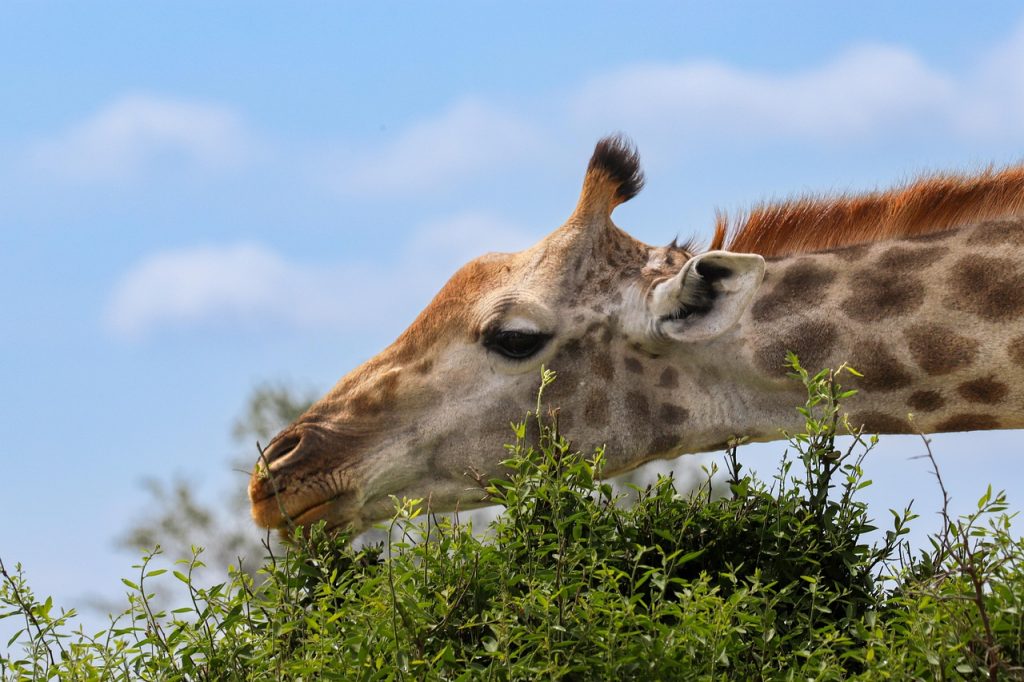
In addition to being a precise tool, this tongue is also incredibly agile. It allows the giraffe to sort the tenderest leaves while avoiding thorns, ensuring optimal nutritional intake. It also plays a key role in looking after its mouth and lips, which, like its tongue, are particularly well adapted to its diet. With an appetite that can lead it to consume up to 30 kg of leaves a day, the giraffe remains a fascinating example of adaptation to its ecosystem, an unforgettable sight to observe on a safari in Tanzania.
The male giraffe: a peaceful dominator or a relentless fighter?
Their role in the group and their interaction with females
In giraffes, males play an essential role in the structuring and social dynamics of groups. Unlike many other savannah mammals, giraffes do not have strictly hierarchical groups. However, males stand out through their territorial and competitive behaviour, particularly when it comes to gaining access to females during the breeding season. Encounters between males, known as “necking”, are impressive displays of strength. These fights, in which the rivals swing their necks and use their ossicones (horns covered in skin) as weapons, often determine which of them will inherit the right to court the females. Although spectacular, these rituals rarely result in serious injury, and once dominance has been established, the winner approaches the females calmly.
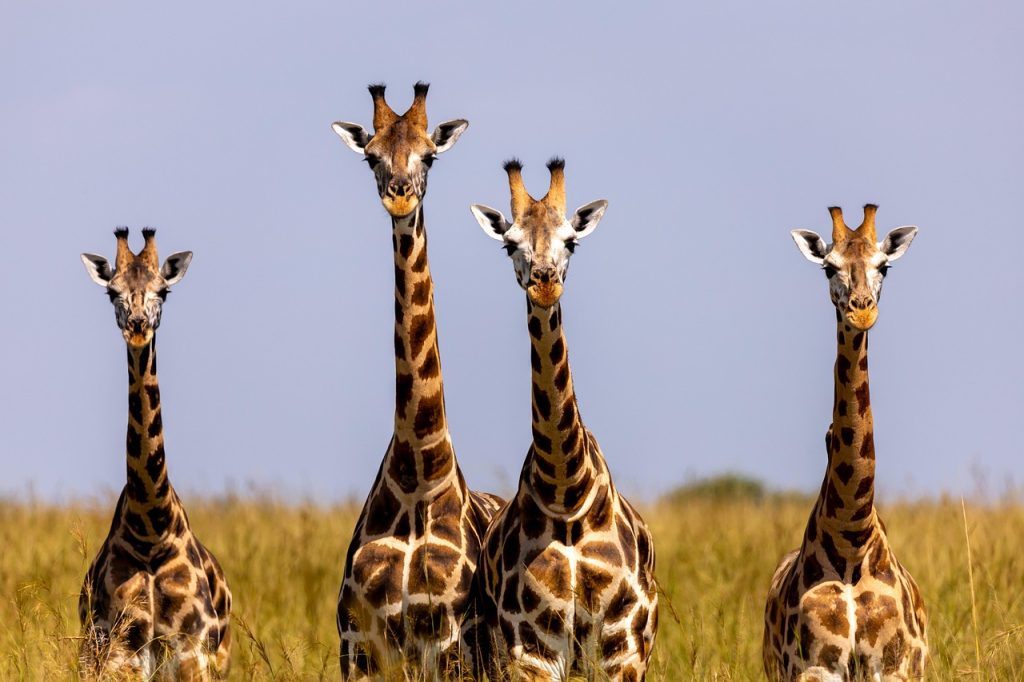
The females, meanwhile, often move in groups made up of their young and other females. When males temporarily join these groups, their interaction is generally peaceful, except in the presence of other dominant males. Reproduction, although competitive in terms of gaining access to females, remains a key moment in preserving the species and is part of the fascinating observations our visitors may hope to enjoy on a safari in Tanzania. Witnessing courtship and the social interactions of giraffes in their natural habitat provides a better understanding of these peaceful giants and their behavioural subtleties.
The phenomenon of “necking”: these singular duels between males
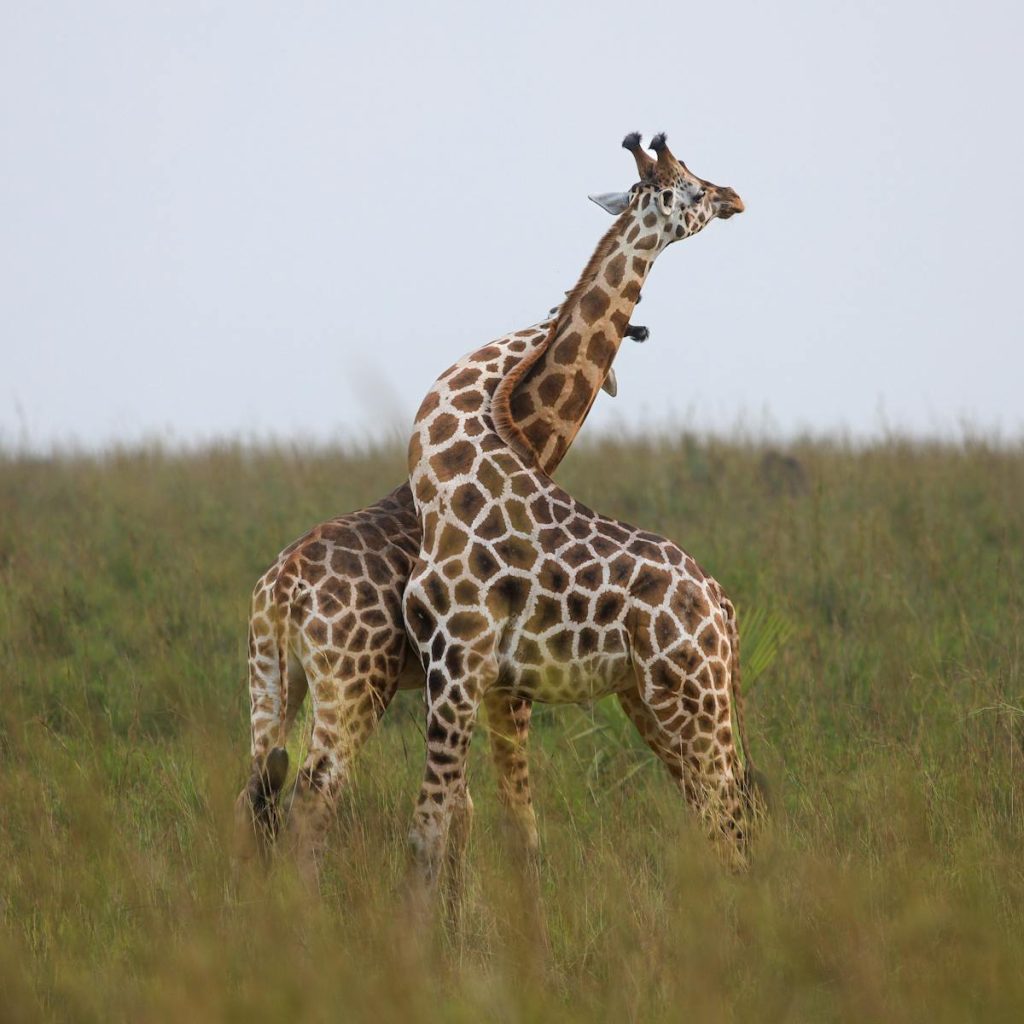
“Necking” is a fascinating behaviour observed in male giraffes seeking dominance and access to females. These singular duels consist of a series of clashes in which the males swing their long necks forcefully to strike their opponent using their ossicones, those small skin-covered horns located on the top of their heads. These spectacular fights, although rarely fatal, can cause impressive injuries and are mainly used to establish a social hierarchy or to win the right to reproduce. During our safaris in Tanzania, witnessing a scene of “necking” is a memorable moment that reveals all the charisma and power of these giants of the savannah.
Despite their great size and apparent slowness, giraffes can reach surprising speeds of 60 km/h over short distances. This ability allows them not only to move away quickly from imminent danger, but also to compete with other males during strategic encounters. Surprisingly agile for their stature, these animals combine power and elegance in their strides, offering a unique spectacle during our expeditions across the vast Tanzanian plains.
Male giraffes are the largest of their species, reaching up to 5.5 metres in height. This monumental size is advantageous not only for scanning the horizon for predators, but also for dominating rivals. Their neck, which can measure up to two metres, is both a symbol of power and a natural weapon used for “necking”. Every safari in Tanzania is an opportunity to get close to these fascinating giants and to be impressed by their imposing stature.
The giraffe is a true expert at browsing, with its prehensile tongue almost 50 centimetres long. It feeds mainly on acacia leaves, which it reaches easily thanks to its slender neck and robust lips. An adult male can consume up to 30 kg of vegetation per day to maintain its energy, needed not only for its graceful movements, but also for its ritual fights. These giants devote several hours each day to this feeding activity, making them captivating to observe for safari enthusiasts.
Male giraffes, true colossi of the savannah, display an impressive weight of up to 1,200 kg. This mass, carried by sturdy legs and an exceptional skeletal structure, gives them both balance and power. This imposing weight is a major asset during clashes, reinforcing their dominance over rivals. Despite their size, giraffes move with astonishing grace, a characteristic that always fascinates travellers who come to admire them in their natural habitat.
How can you tell male giraffes from females?
Male and female giraffes share a majestic appearance, but several details make it easy to tell them apart during your safaris in Tanzania. Firstly, males are generally larger: they can reach up to 5.5 metres in height, compared with around 4.5 to 5 metres for females. Their weight is also a distinguishing factor, with males weighing up to 1,200 kg, compared with 800 to 900 kg for their female counterparts. Next, the ossicones (those horn-like skin-covered protrusions on their heads) are thicker and often bare at the tips in males because of the frequent clashes known as “necking”. In females, these ossicones remain slimmer and always covered with hair. Finally, their behaviour can also provide clues: males engage in spectacular fights to establish dominance, while females devote more time to protecting and raising their young. Observing these differences is a fascinating part of the safari experience in the heart of the African savannah.
What is the giraffe’s weight? A frame adapted to extreme conditions
An impressive weight in service of their slender stature
With a stature that defies the laws of nature, the giraffe also displays a weight to match its grandeur. An adult giraffe can weigh between 800 and 1,200 kg, with males often heavier than females. This considerable mass, borne by their long powerful legs and an exceptional bone structure, is the result of an evolutionary adaptation perfectly suited to the savannah. Although this impressive build may seem difficult to maintain, these giants offset their weight with a graceful gait that sets them apart. On our safaris, you will witness their movements as elegant as they are agile.
Their imposing frame does more than support their enormous size; it also enables them to defend themselves effectively. Thanks to legs capable of carrying their weight while offering remarkable stability, the kicks they can deliver to a predator are highly effective. Despite this, the giraffe remains a peaceful animal, using its natural height to deter potential threats and thrive harmoniously in the vast plains of Tanzania. Once you have observed this unique blend of robustness and grace, it is easy to understand why this animal is so fascinating to visitors in search of wonder.
List: Comparison of weight between females, males and calves
As true giants of the savannah, giraffes differ significantly in weight depending on their age and sex. Here is a comparative list to help you understand these impressive differences between females, males and calves:
- Calves : At birth, calves weigh around 50 to 70 kg. Despite their modest size at this stage, they are already able to stand up and walk within just a few hours, a crucial asset for their survival in the savannah.
- Adult females : Females reach an average weight of 800 to 900 kg. Their lighter build compared with males supports their role as protectors, often seen in groups with their young.
- Adult males : Males, for their part, display an impressive weight that can reach 1,200 kg. Their robust build, coupled with a slightly greater height than that of females, gives them the advantage in necking battles to establish dominance.
These weight differences reflect the distinct roles that males, females and calves occupy in their natural environment. On our safaris in Tanzania, it is fascinating to observe these variations and relate them to the way of life of these imposing mammals. These figures, vast though they are, in no way diminish their natural grace, which you can admire up close in the magnificent African plains.
The physiological implications of such weight on their way of life
The impressive weight of giraffes, ranging between 800 and 1,200 kg for an adult, is far more than just a simple figure. It reflects a clever physical and behavioural adaptation that allows them to thrive in the savannah. This imposing build is supported by powerful legs and a robust skeleton, essential for bearing their slender stature and maintaining perfect balance as they move. However, carrying such weight while preserving a graceful gait is a challenge that giraffes meet admirably thanks to a unique alternating gait and flexible joints.
Despite their imposing frame, this mass in no way hinders their agility. When threatened, their long legs are not only built for rapid strides – enabling them to reach speeds of 60 km/h – but are also their best weapon against predators. Indeed, a kick can incapacitate an adult lion. This weight, playing a key role in their defence, is also a deterrent factor for many natural enemies.
Finally, this colossal body mass entails equally significant nutritional needs. To maintain their energy, a giraffe must consume nearly 30 kg of vegetation per day, mainly made up of acacia leaves. Their diet is not only suited to their weight, but also to their environment, exploiting resources high up that are out of reach of other herbivores. Observing these giants of the savannah moving with surprising elegance or feeding in their natural habitat during our safaris in Tanzania is an unforgettable experience. It is a fascinating balance between strength, adaptation and grace that is sure to captivate travellers.
Why are giraffes so fascinating in their natural habitat?
The key ecological role of giraffes in the savannah
Giraffes, true emblems of the African savannah, capture everyone’s attention thanks to their impressive stature and fascinating behaviour. By taking part in a safari in Tanzania with Off Road Tanzania, you will have the unique opportunity to observe these giants in their everyday lives, evolving in their natural habitat. Their ability to reach unparalleled heights, their surprising speed and their interaction with the other members of their species make them essential protagonists of Tanzania’s wildlife. Encountering these majestic herbivores in the wild is an unforgettable experience that illustrates the richness and delicate balance of African ecosystems. Close your eyes and imagine: in the middle of the golden plains of Serengeti, a giraffe, its neck stretched towards the sky, creates a silhouette that on its own symbolises the majesty of wild Africa.
How to observe them on a safari in Tanzania with Off Road Tanzania
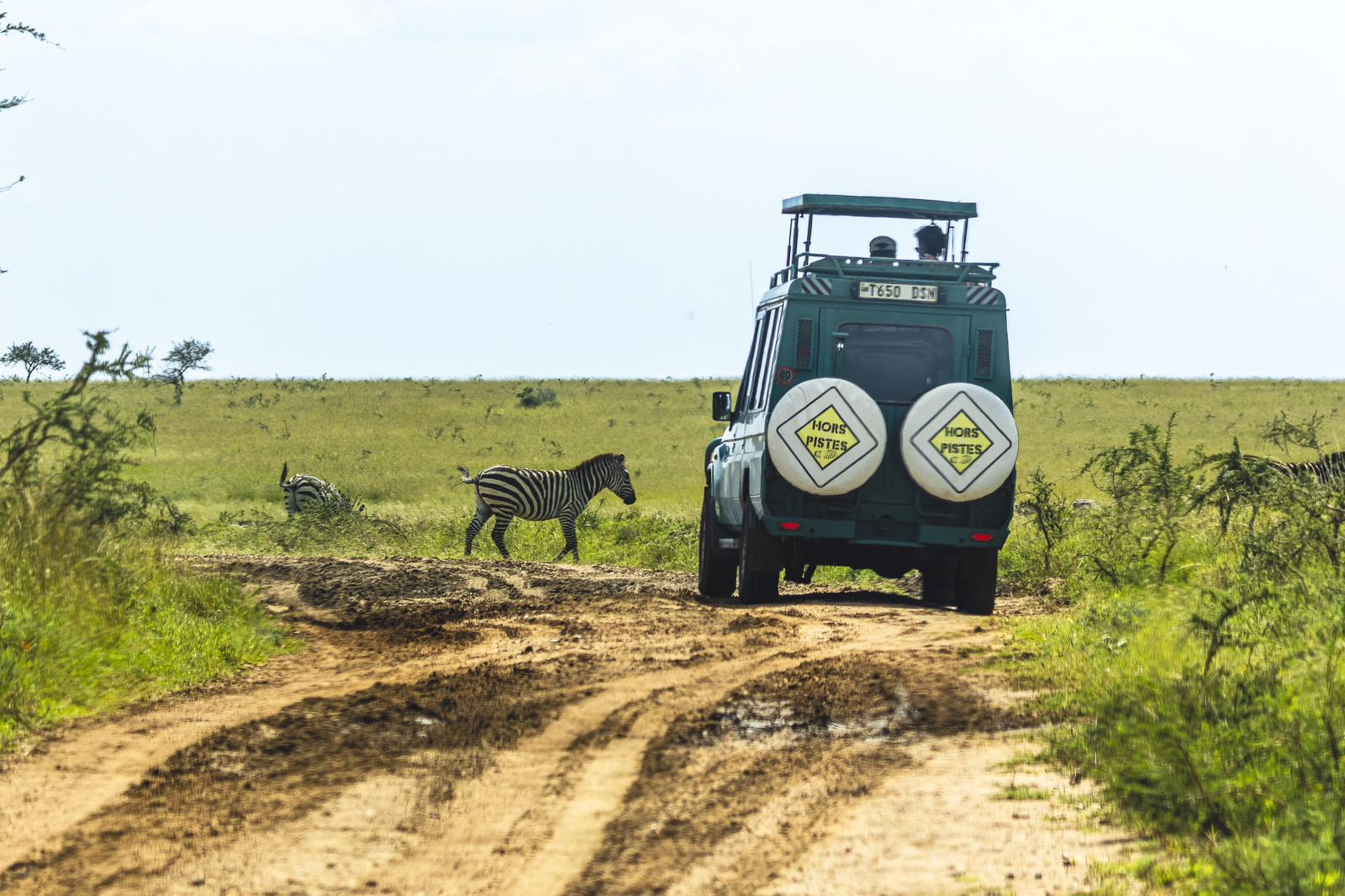
Observing giraffes in their natural habitat is an unforgettable experience you can enjoy on a safari in Tanzania with the Off Road Tanzania agency. In the heart of the vast plains of Serengeti or the Selous Reserve, these giants of the savannah reveal themselves in all their majesty. Thanks to our experienced guides and aboard our 4x4s fitted with pop-up roofs, you will have the opportunity to admire these fascinating animals up close, whether they are feeding on acacia leaves or moving with their graceful, distinctive gait. Prepare your binoculars and your camera, because every encounter with a giraffe is a window onto Africa’s incredible biodiversity, capturing moments rich in emotion and discovery.
Conservation efforts to protect these emblematic creatures
Giraffes, true symbols of the savannah, do more than captivate travellers’ imaginations: they also play a vital ecological role. Alas, their population is declining due to habitat loss, poaching and the impacts of climate change. Faced with these threats, various conservation programmes and local initiatives have been launched to preserve these majestic giants. In Tanzania, particularly in national parks such as Serengeti or Tarangire, efforts are being made to monitor these populations, raise awareness among local communities and restore crucial areas for their survival.
Agencies such as Off Road Tanzania are also involved in preserving biodiversity by promoting sustainable and responsible tourism. By working with local associations and raising travellers’ awareness, these initiatives help to raise funds for research projects, anti-poaching efforts and reforestation. On our safaris, we make sure to highlight these efforts and inform our visitors about the fragility of this ecological balance so that everyone can become an ambassador for African wildlife. Observing a giraffe in the wild is much more than a simple excursion: it is precious testimony to a heritage that must be protected urgently for future generations.