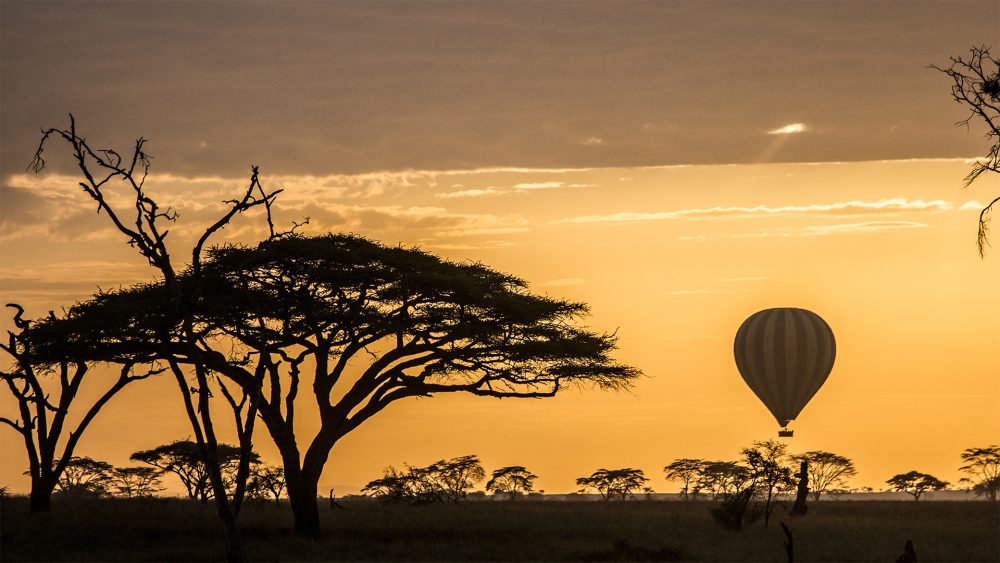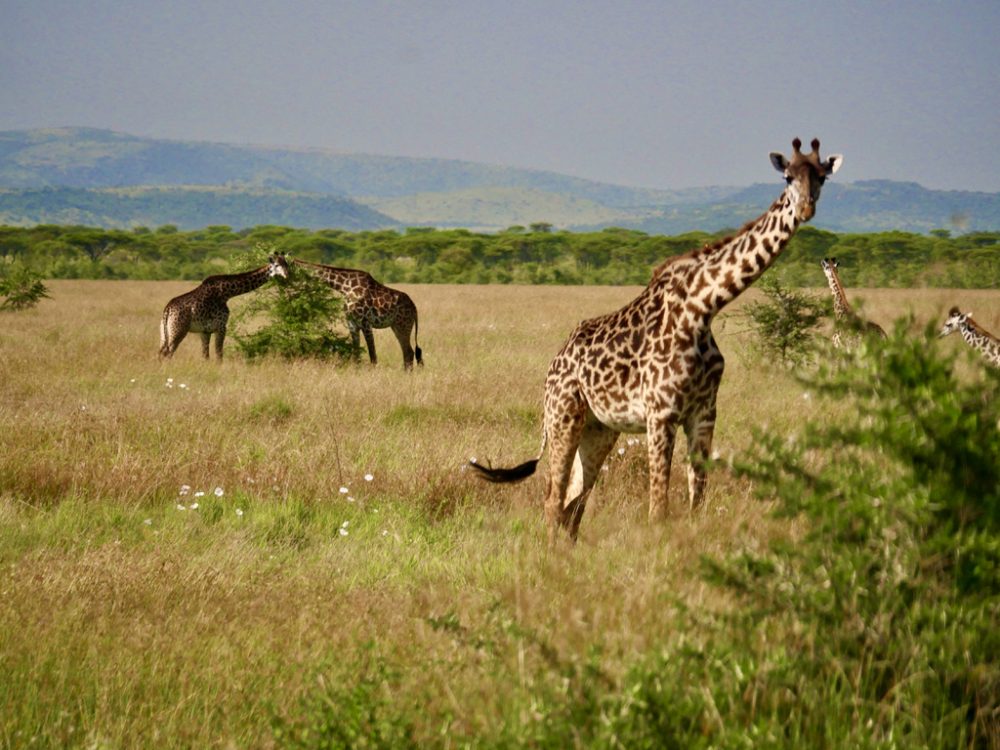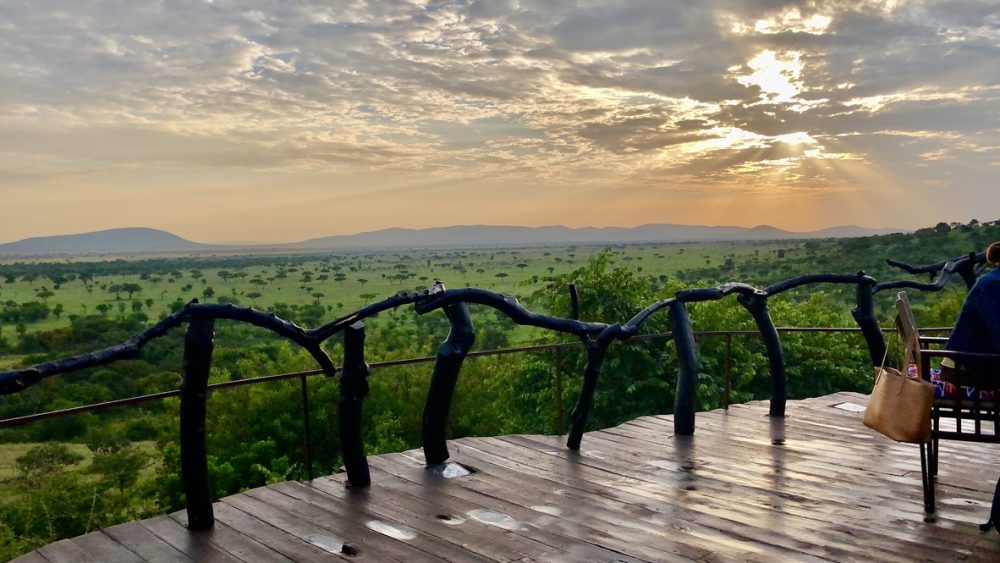
The Serengeti is the largest national park in Tanzania, with an area of 14,763 km² of grassy plains, wooded savannah, wooded hills and forests. It is a boundless expanse, hence its name: Serengeti, derived from the word “Siringit”, meaning “endless plain” in the Maasai language.
Park ecosystems
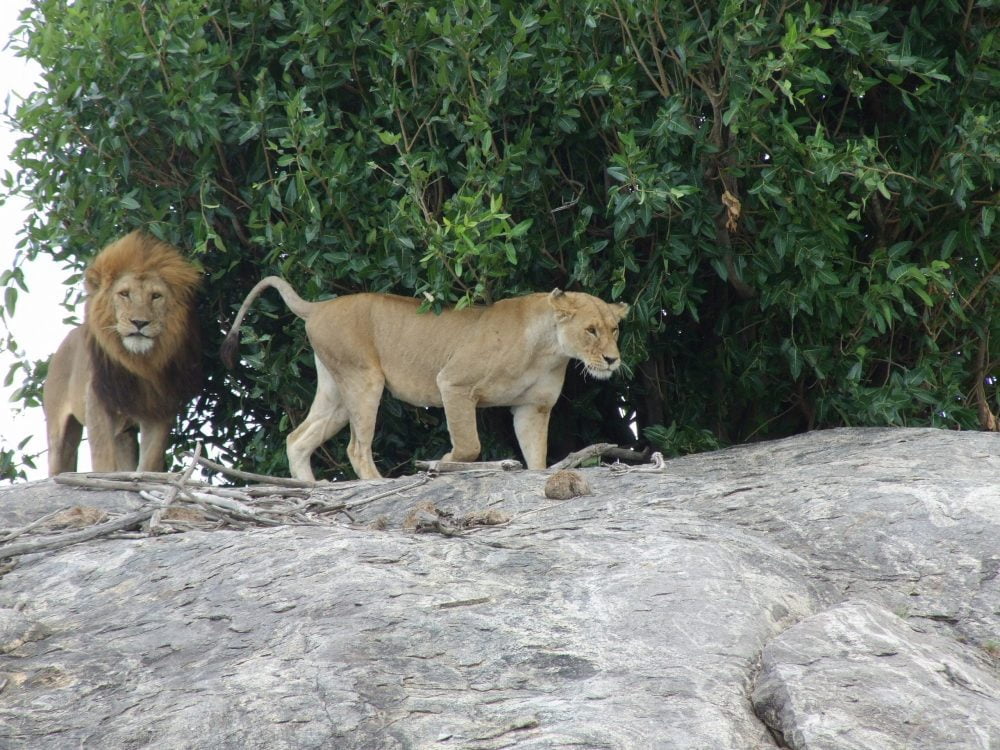
It is in the south of the Serengeti that the park’s iconic plains are found. Grass covers the region abundantly and attracts huge herds of herbivores. There are also numerous granite rocks known as “kopjes”, on which you can easily see lions dozing or watching the surrounding plains.
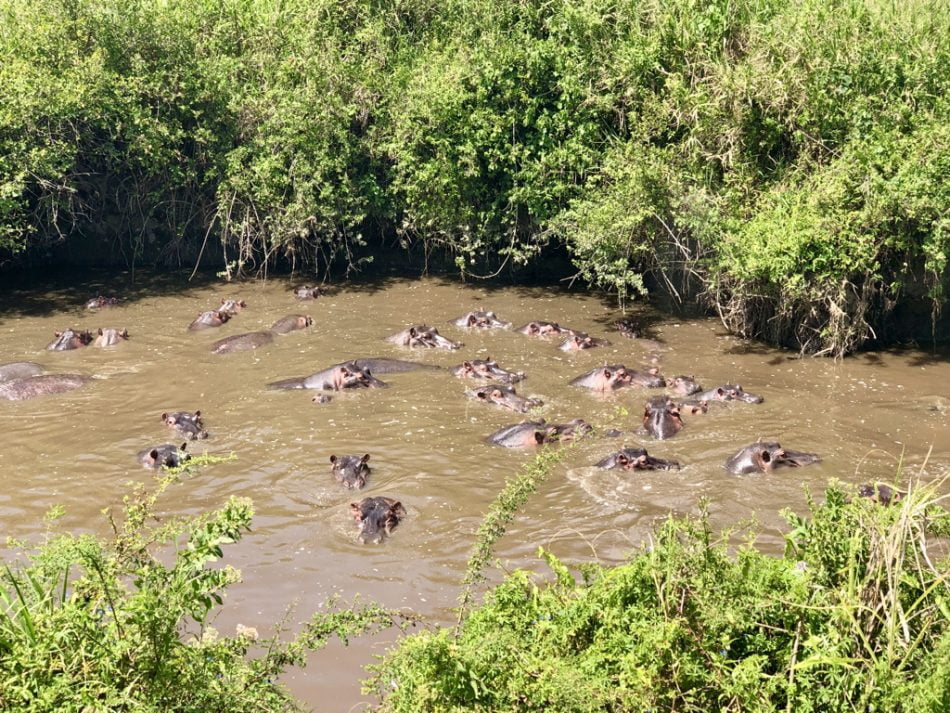
The centre of the Serengeti is marked by the Seronera Valley, rich in a wide variety of wildlife drawn by its permanent river. It is an area renowned for its high concentration of big cats.
The west of the park, known as the western corridor, is a transit area for the Great Migration. Indeed, you can witness the crossing of the Grumeti River by thousands of herbivores on their way to the Maasai Mara in May – June. With a bit of luck, you may see crocodiles hunting!
The east of the Serengeti, or the Namiri region, promises an incomparable immersion in the national park. It is characterised by vast plains similar to those in the south, kopjes and small wooded massifs. It is the ideal place for an exclusive safari, far from tourists.
Finally, the north of the Serengeti borders the famous Maasai Mara (Kenya). It is also a strategic point for observing the Great Migration as it approaches the Mara River. The Mara River region is characterised by plains, wooded hills and significant resident wildlife. It is also the point where the herd of herbivores splits. Some continue on towards the plains of the Maasai Mara, while the others remain in the northern Serengeti between July and October.
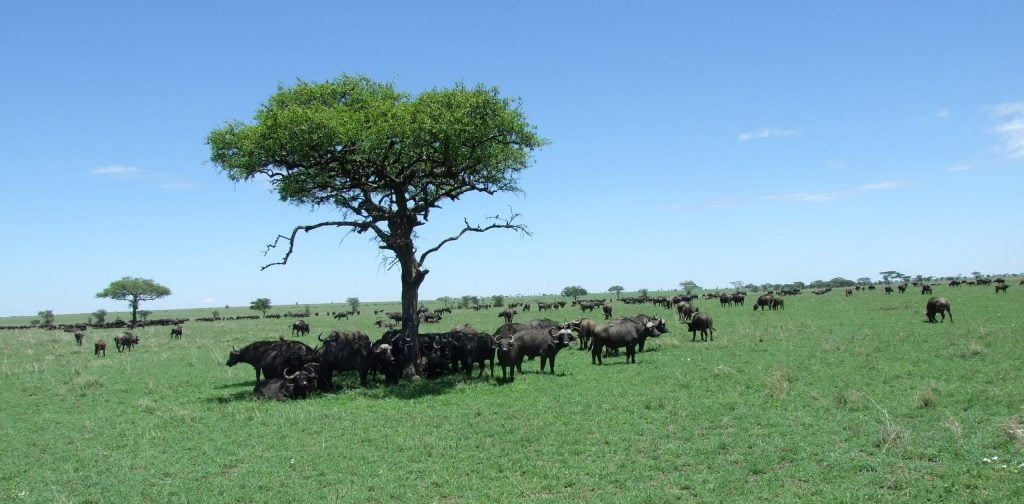
In the north-east of the park, you will find the Lobo Valley, made up of rocky escarpments and forests. It is mainly home to buffalo and elephants and sees the Great Migration pass through on its return from Kenya in October.
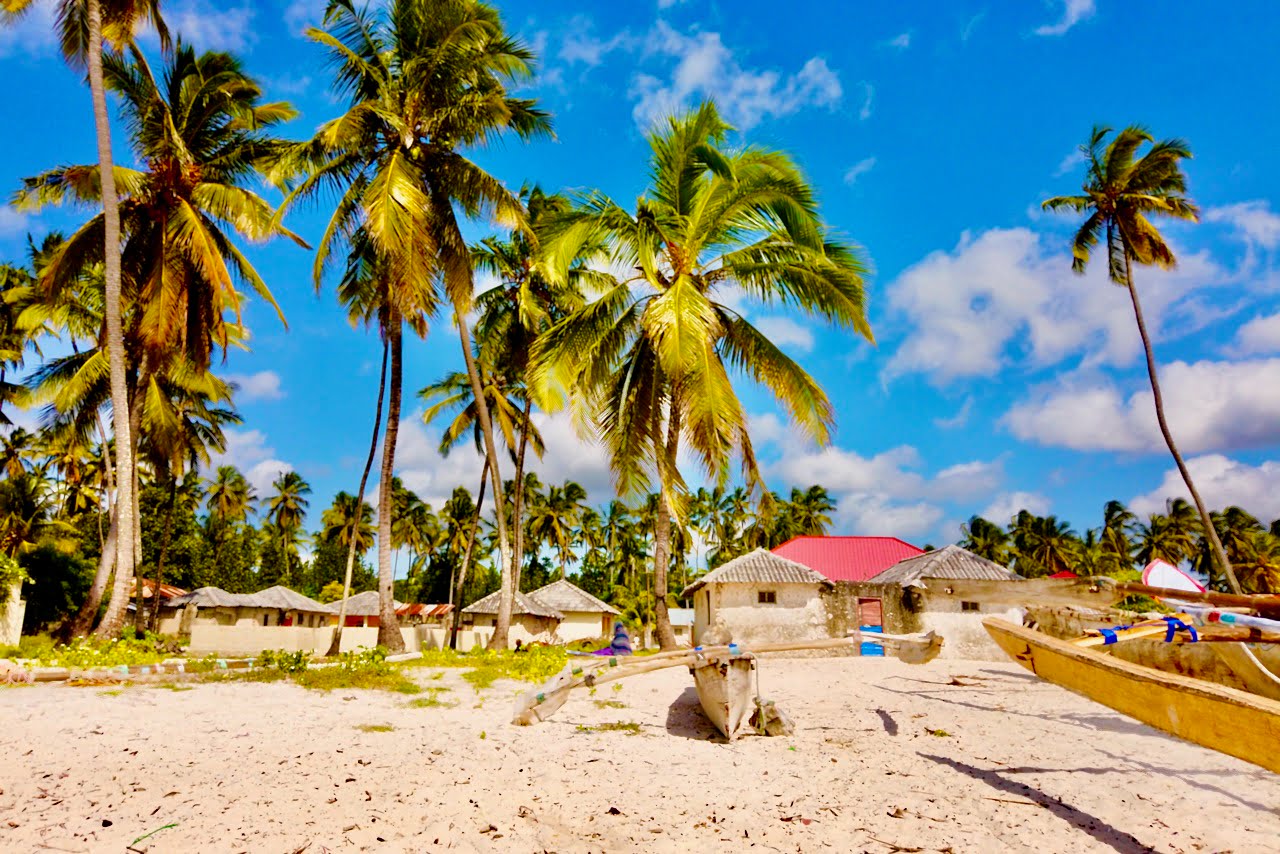
Discover our safari programme with a Zanzibar extension now!
When is the best time to go on safari in the Serengeti?
Serengeti National Park has a short rainy season in November and another from March to May. These remain relatively manageable, and so do the temperatures. That is why we advise choosing your travel dates more according to what you want to see than according to the weather.
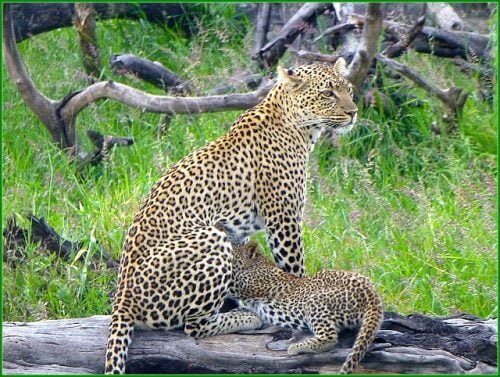
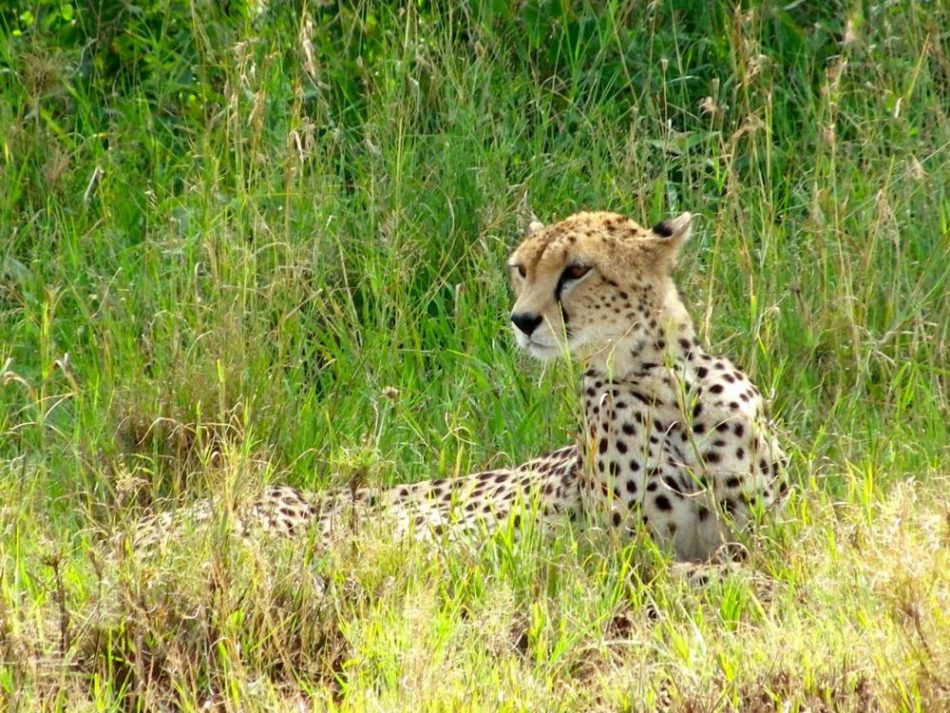
The Serengeti is the world’s most famous wildlife reserve. And for good reason: it is home to an extremely diverse and abundant wildlife all year round. In fact, there are over 4 million animals, including more than 400 bird species. You will also find the Big Five: lion, leopard, buffalo, elephant, rhinoceros, as well as hyenas, birds of prey, cheetahs…
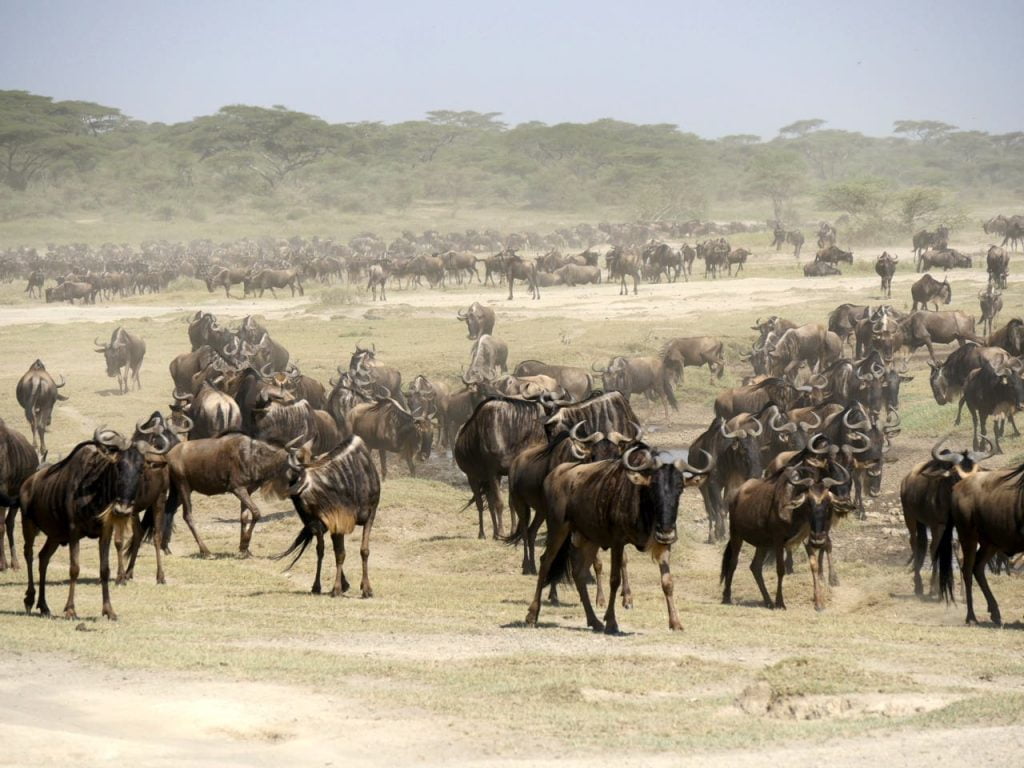
The park is best known for the great migration of herbivores, made up of more than 1,600,000 wildebeest, 250,000 zebras and numerous gazelles. Each part of the park has its best season for observing this natural spectacle. We tell you everything here!
January, February, March: The herd gathers in the Ngorongoro Conservation Area (southern Serengeti). It is at this time that you can witness the birth of tens of thousands of baby wildebeest, mainly in the Ndutu area.
October, November, December: The migration moves back down into the plains of the southern Serengeti so that the females can give birth safely.
April, May: The herd begins its long journey north to find pasture and passes through the western corridor, where the Grumeti River region is. It is here that large crocodiles eagerly await the arrival of the gigantic herd, and you will be just as eagerly awaiting the start of an impressive spectacle.
June, July: The herd approaches the Mara River, where it disperses.
August, September: During these two months, the bulk of the herd is in the Maasai Mara in Kenya.
Why go on safari in the Serengeti?
Serengeti is really worth the detour if you are travelling in Tanzania. Here are our 5 reasons to visit Serengeti National Park:
- having every chance of spotting the Big Five
- having a high probability of witnessing hunting scenes
- witnessing the great wildebeest migration
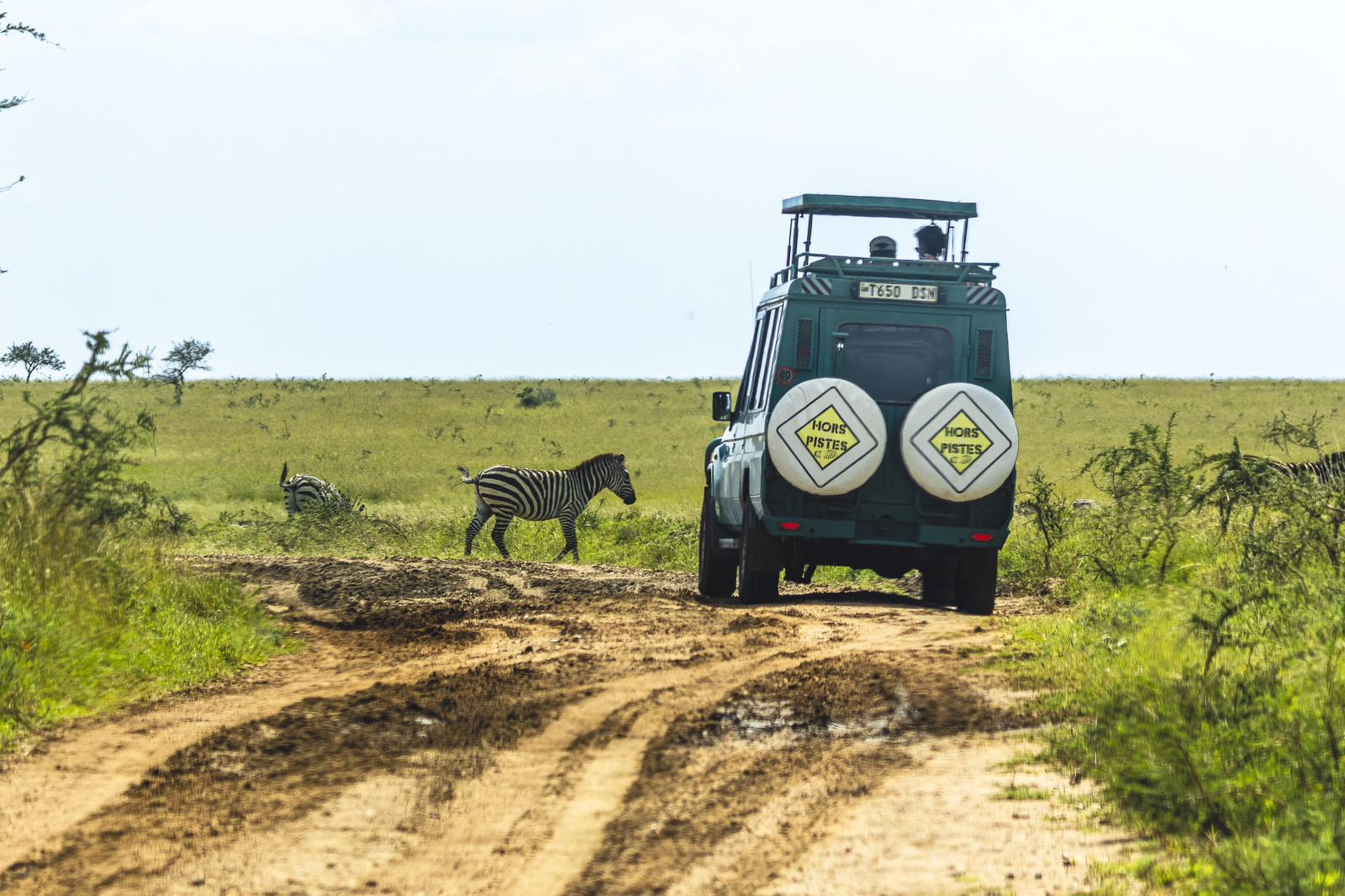
- being able to do a bit of off-road to get closer to the animals
- finding yourselves alone facing a vast wilderness

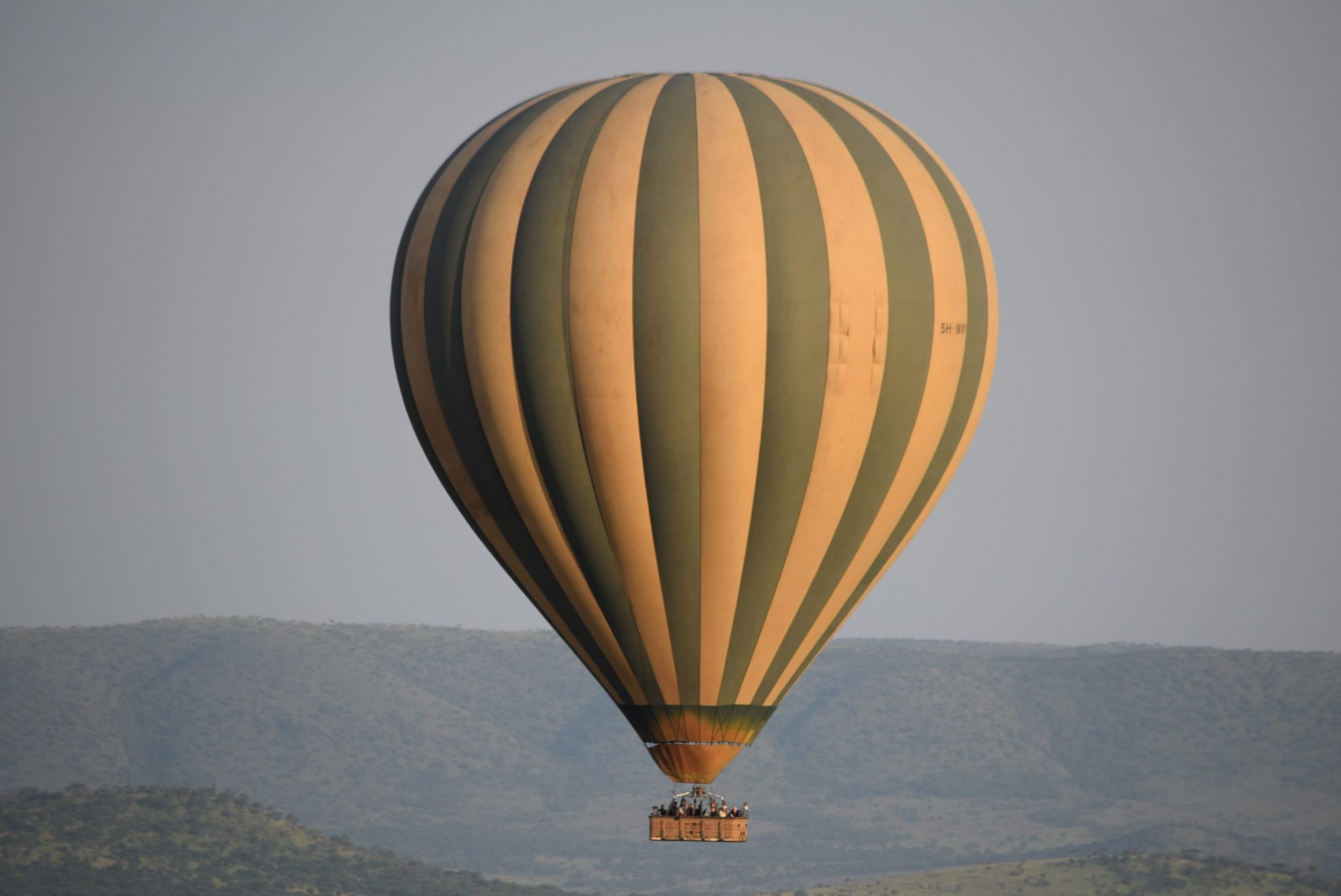
Activity highlight of the park: a hot-air balloon flight!
Serengeti is an incredible park to see from the ground, but not only that…
What if you took to the skies to observe plains stretching as far as the eye can see, in silence and tranquillity. You will set off at dawn and fly over the migration of millions of wildebeest under the beautiful colours of daybreak. Trust us, this is an experience not to be missed after a 4×4 safari. Three words come to mind to describe it: fabulous, unforgettable, extraordinary.
So do as Timon does in The Lion King and go “beyond what [you see]” with Off Road Tanzania !